

Kashi.
A world within a city.
A river, a sacred landscape, a place of learning and a city that keeps creating. Discover the many worlds that meet in Kashi, the home and inspiration of Anime Devta.
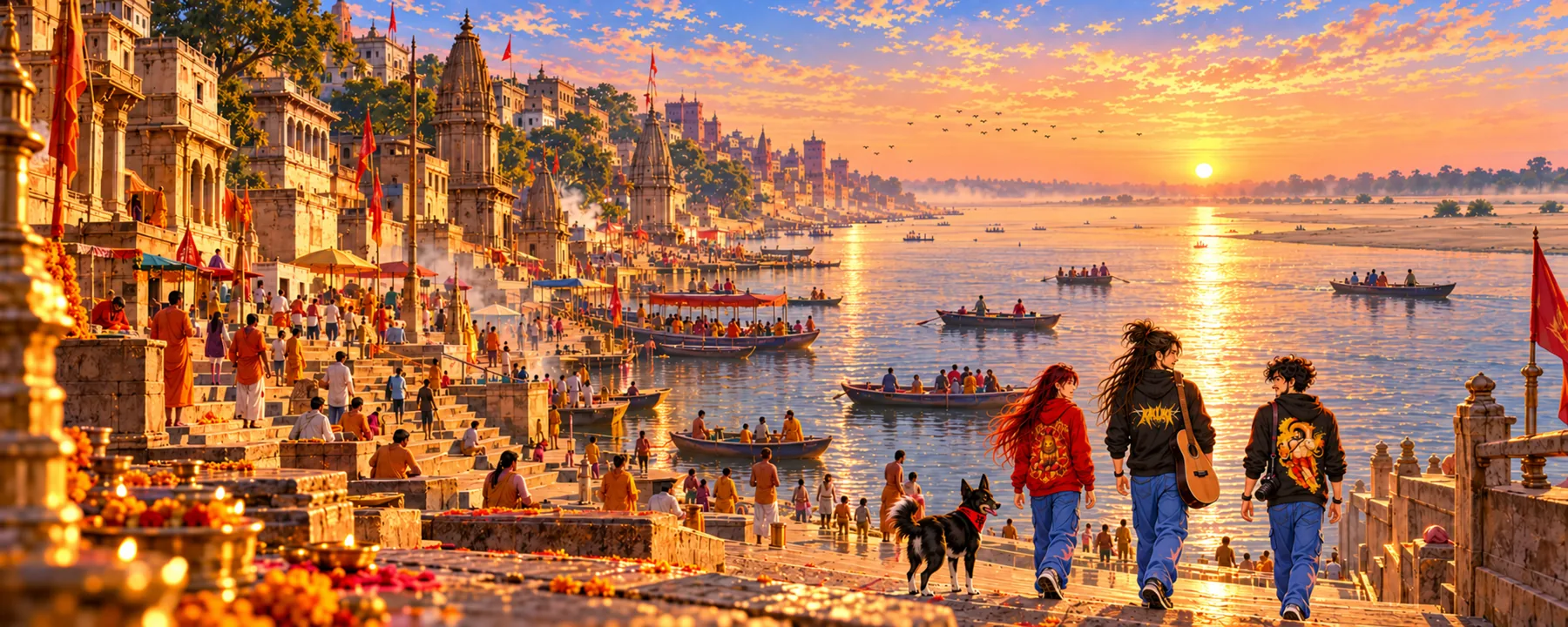
01Mahadev’s Kashi.
Faith woven into the life of the city.
Mahadev’s Kashi.
Faith woven into the life of the city.For devotees, Kashi is Shiva’s beloved city. Kashi Vishwanath stands at its sacred heart, while neighbourhood shrines make worship part of the everyday rhythm of its lanes.[1]
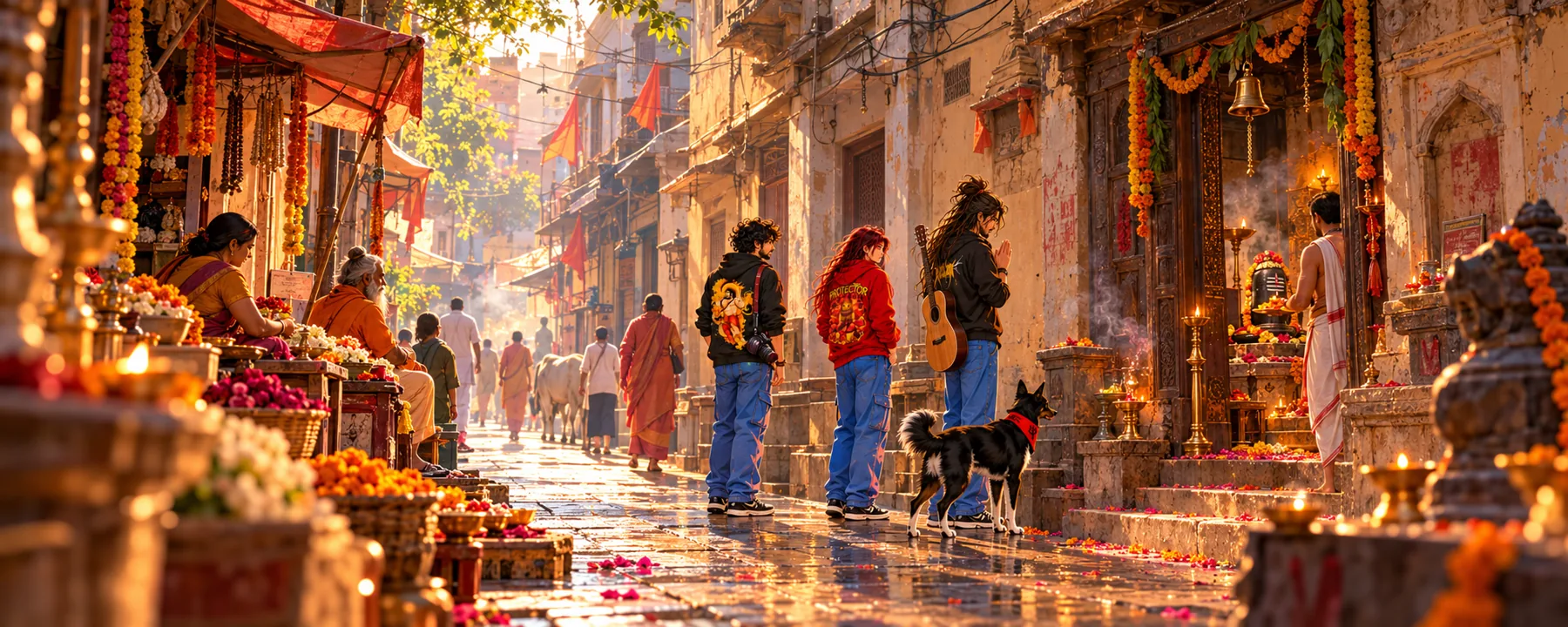
A sacred landscape, beyond one temple
Annapurna, Vishalakshi, Kal Bhairav and Hanuman are part of the city’s devotional life. Pilgrimage unfolds through temples, sacred routes, riverbanks and small acts of service, alongside the work of an ordinary living city.[1]
02Avimukta. The city never forsaken.
Kashi in sacred memory and Purāṇic tradition.
Avimukta. The city never forsaken.
Kashi in sacred memory and Purāṇic tradition.Kashi also lives in sacred imagination. In the Shiva Purana, the city is upheld by Shiva’s trident even through cosmic dissolution. Avimukta expresses its enduring connection to Shiva and liberation.[2]
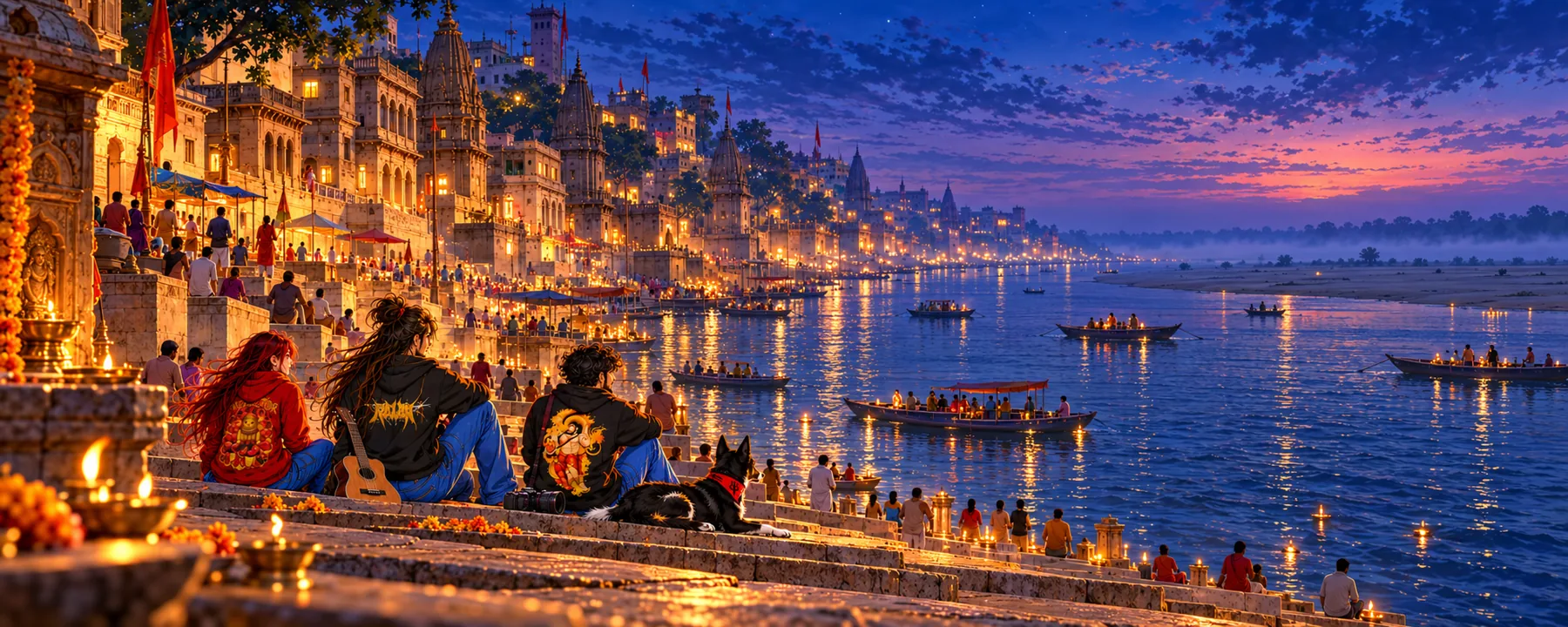
Life, death and the meaning of liberation
The city’s association with moksha gives its cremation ghats, including Manikarnika, profound significance for many Hindus. Here, mortality sits close to daily life. These are places of mourning and sacred practice, deserving dignity and care.
The luminous city and Shiva’s trident belong to Purāṇic sacred narrative. They express a sacred geography that extends beyond the visible streets and ghats.[2]
03The Ganga sets the rhythm.
A river of devotion, work and everyday encounters.
The Ganga sets the rhythm.
A river of devotion, work and everyday encounters.Morning boats, bathing, prayer and evening aarti: the river shapes the city’s sense of time. Its ghats are places of devotion, work and encounter, with each flight of steps opening onto another story.[3]
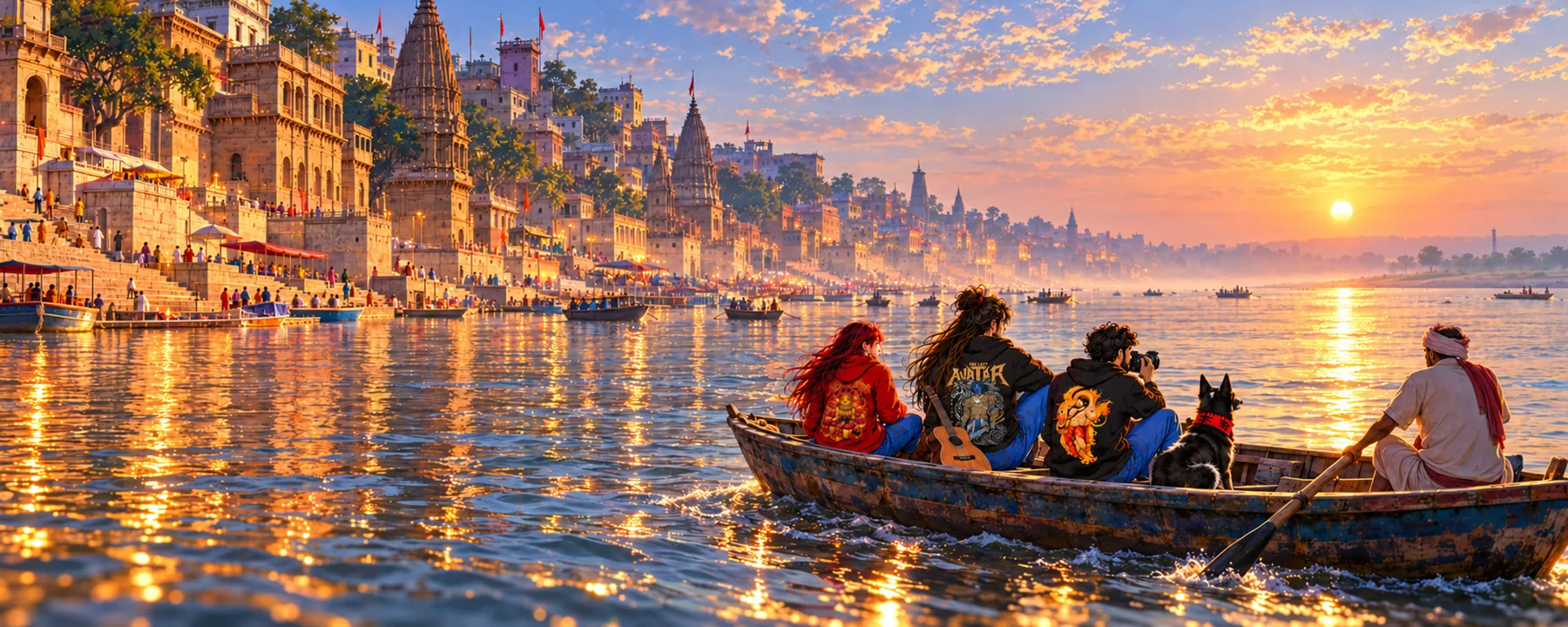
A living river, a shared responsibility
The monumental ghats line the western bank; across the water lies a low sandy floodplain. Boatmen, priests, vendors, residents and pilgrims all belong to this riverfront world. Reverence also calls for care: for the water, the people who depend on it and the spaces everyone shares.
04Many paths. A shared landscape.
Different traditions. A shared cultural landscape.
Many paths. A shared landscape.
Different traditions. A shared cultural landscape.Nearby Sarnath recalls the Buddha’s first teaching after enlightenment. Varanasi and its surroundings also hold deep Jain associations. Kashi’s wider story includes Sikh, Muslim and other communities, alongside its Hindu traditions.[3][4]
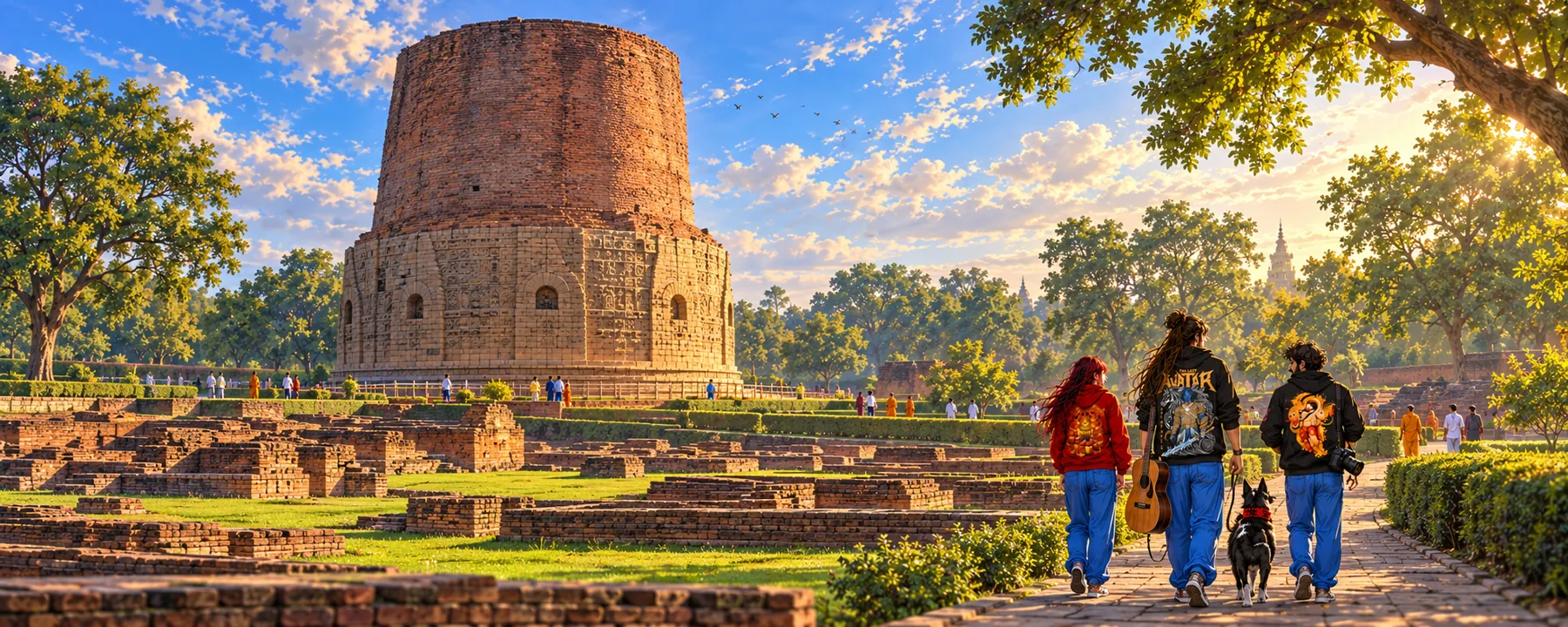
Saints, poets and different ways of belonging
Kabir, Ravidas and Tulsidas are among the voices associated with Banaras. Their poetry and devotional legacies invite questions about faith, dignity and the ways people relate to the divine. The city’s cultural life is richer than any single account of it.[5]
05A city that keeps asking.
Teachers, students and questions across generations.
A city that keeps asking.
Teachers, students and questions across generations.Learning belongs to Kashi’s identity: philosophy, Sanskrit, discussion and the relationship between teacher and student. Its educational life continues through universities, classrooms and conversations that bring inherited knowledge into the present.[1]
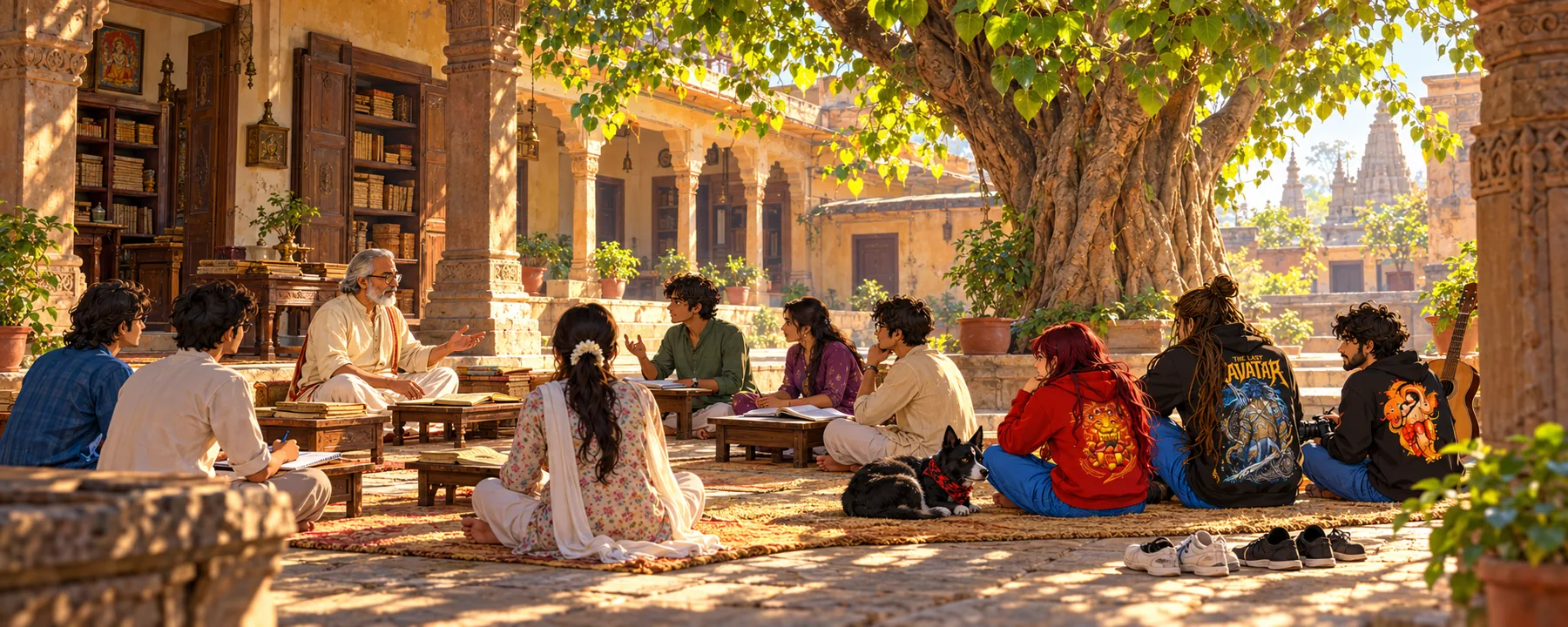
From traditional study to modern institutions
Banaras Hindu University, Sampurnanand Sanskrit University and Mahatma Gandhi Kashi Vidyapith are part of this wider learning landscape. Scholarship and creative practice sit alongside one another, keeping questions alive across generations.[8]
Yoga, akhara traditions and the city’s associations with Ayurveda and healing add further dimensions to its understanding of the body and mind.[1]
06A city you can hear.
The music and listening traditions of Banaras.
A city you can hear.
The music and listening traditions of Banaras.Shehnai, tabla, voice and the patient work of practice. Music is woven into Banaras through performance and the guru–shishya tradition. Varanasi has been a UNESCO Creative City of Music since 2015.[6]
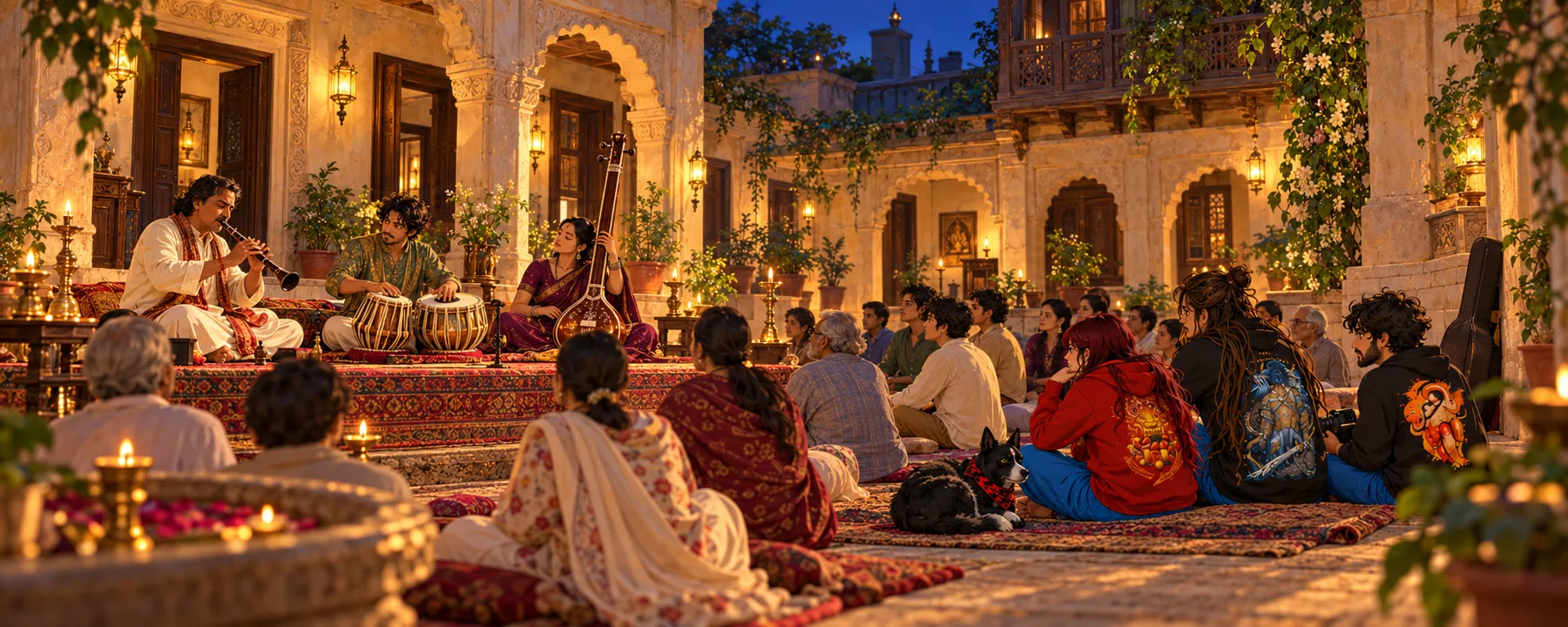
Music passed from one person to another
Beyond the concert stage, musical knowledge is sustained through teaching, rehearsals, festivals and close listening. A small baithak can make the connection between performer and audience feel as significant as the performance itself.[6]
07Tradition, made by hand.
The skill behind Banarasi textiles and crafts.
Tradition, made by hand.
The skill behind Banarasi textiles and crafts.A Banarasi textile holds the skill of the people who make it. Silk weaving, brocade and zari are part of a wider craft culture that also includes wooden toys, metalwork and other forms of patient, precise making.[7]
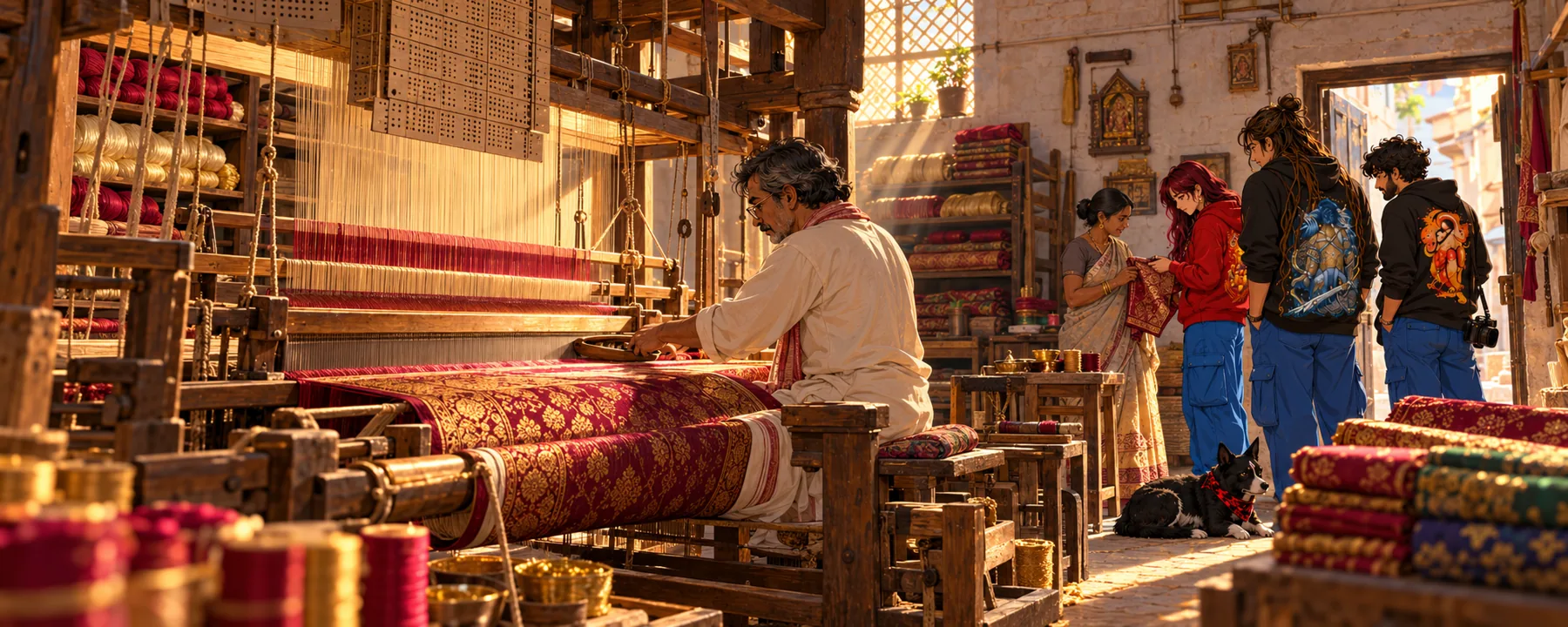
Look beyond the finished object
Behind a pattern are hands, tools, time and livelihoods. The city’s artisans and weaving communities keep techniques alive through daily work. Meeting that work on its own terms reveals another side of Kashi’s creativity.[7]
08A calendar lived together.
Festivals that bring the city together.
A calendar lived together.
Festivals that bring the city together.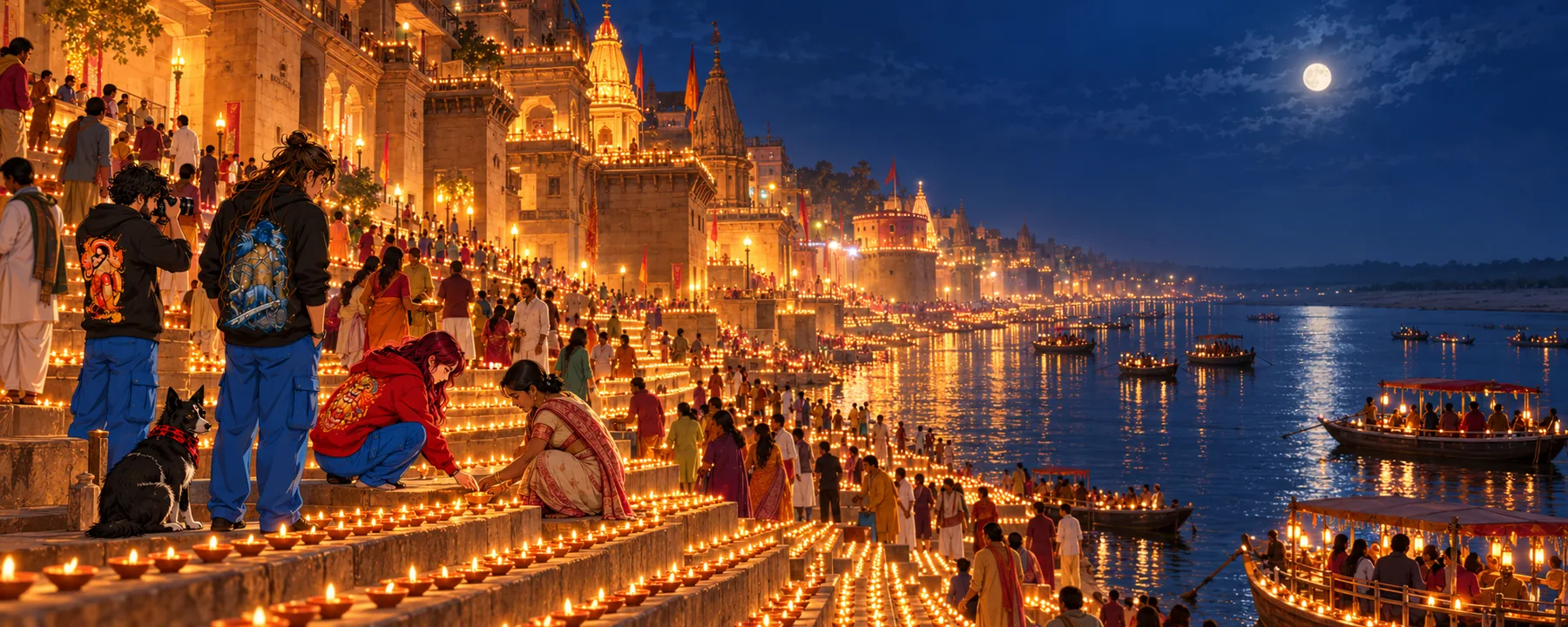
09And then, there is Banaras.
Chai, lanes and the warmth of ordinary moments.
And then, there is Banaras.
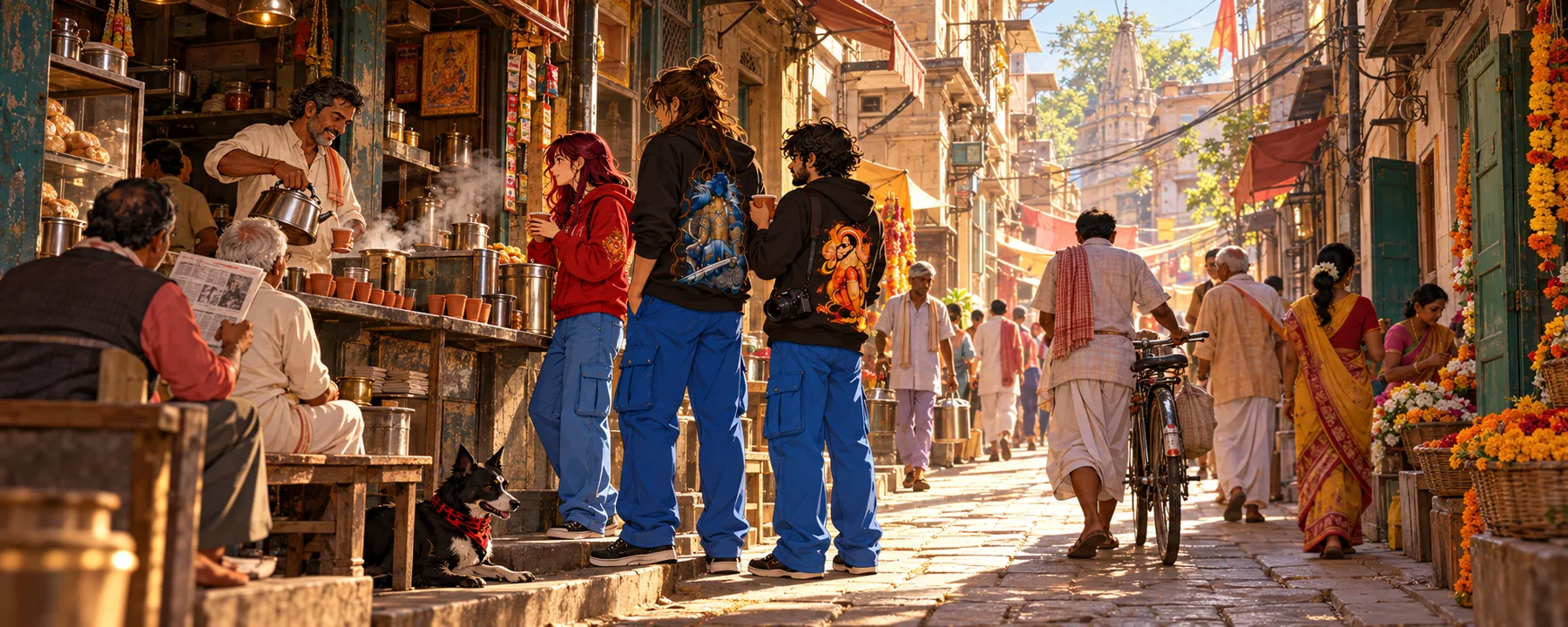
Chai, lanes and the warmth of ordinary moments.A kulhad of chai. Breakfast at a familiar stall. A bicycle easing through a narrow lane. Between its great sacred stories, the city lives through food, humour, conversation and the warmth of everyday encounters.[3]
10Where the city inspires new stories.
A home for research, artists and new stories.
Where the city inspires new stories.
A home for research, artists and new stories.Kashi gives Anime Devta a place to listen, learn and create. At the heart of our vision for AD Studio Kashi is a meeting of cultural research, artists and new storytelling tools, bringing Sanatan Dharma’s stories and imagination to a new generation.
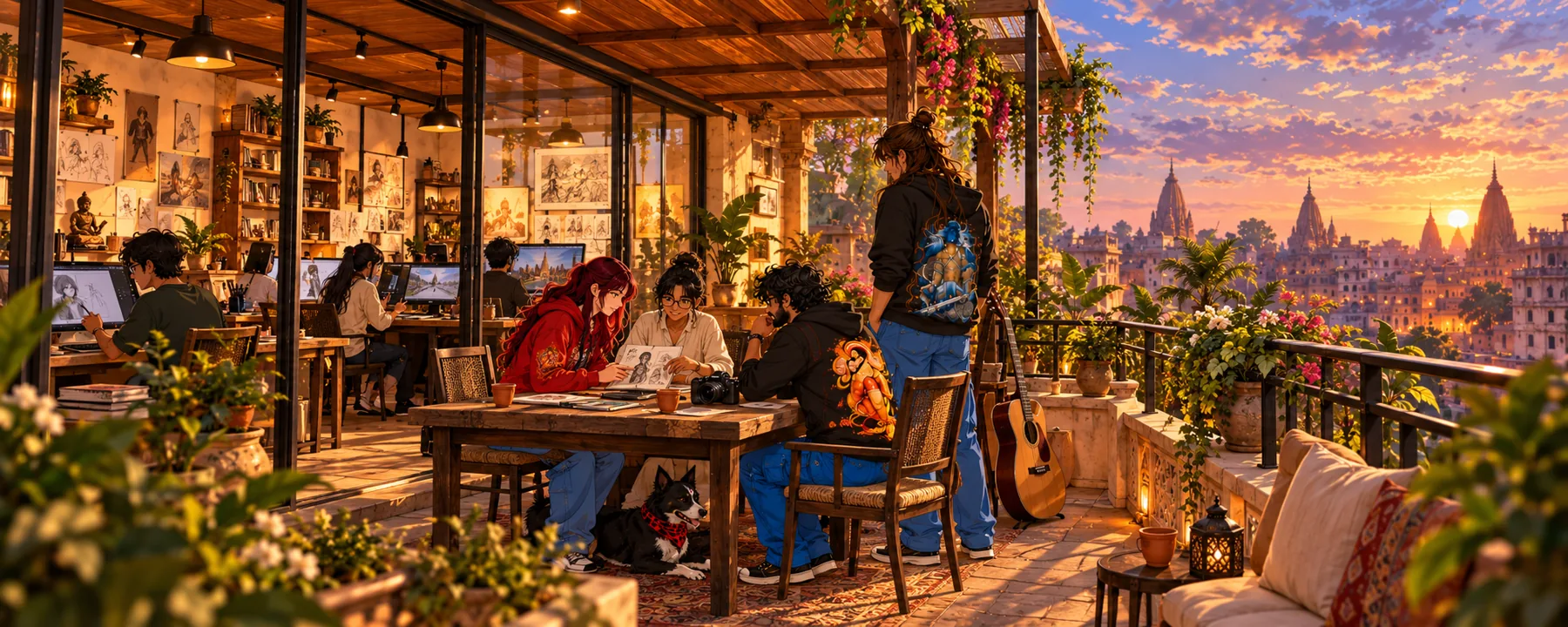
Laija, Rudra, Hanu and Bhairu accompany this illustrated journey. The city, its people and its traditions remain the heart of the story.